
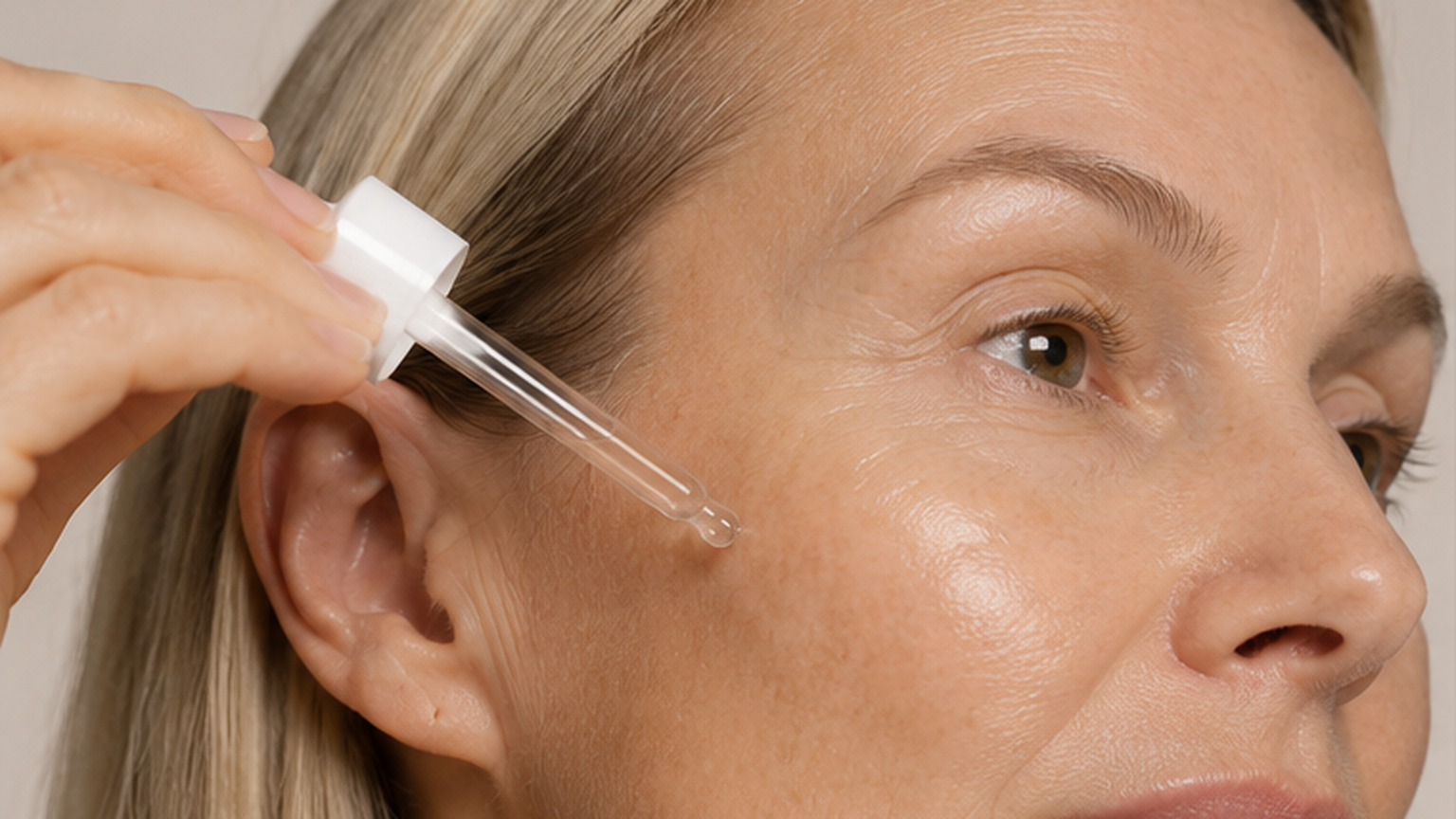
There is hardly a more important topic in the cosmetics industry today than anti-ageing. Innovative formulations and active ingredients mean that beauticians now have effective, concentrated solutions at their disposal, along with both new and well-established actives, to combat and slow the signs of skin ageing. Outstanding evergreens include retinol, hyaluronic acid and coenzyme Q10, which already deliver very good efficacy when used on their own but also produce synergistic effects in combination.
Skin care with retinol is enjoying ever greater popularity thanks to its skin-renewing properties – even though it is a long-established active ingredient in cosmetics.
Why is retinol so popular? Because retinol and its derivatives are extremely well researched scientifically in terms of their clinical efficacy. This is why it is referred to as the “gold standard” in anti-ageing. Retinol is often equated with vitamin A, but this is not entirely accurate. Vitamin A is an umbrella term for a group of compounds known as retinoids. In cosmetics, these include retinol, retinaldehyde and derivatives such as retinyl palmitate, all of which have different biological activities.
Anti-ageing concentrates contain retinol and related actives above all:
- for a smoothing, anti-wrinkle effect
- to build up the skin structure
- to form new skin cells
- to boost the tissue-supporting elastin and collagen fibres
Retinol and related actives can cause skin irritation, redness or flaking, and may therefore only be used in cosmetics in limited concentrations. For sensitive skin it is advisable to opt for derivatives, which act more gently. In Germany, a warning notice has been introduced for safety reasons which will appear on products in future: “Contains vitamin A. Take your daily intake into account before use.” The purpose of this notice is to prevent an overdose of vitamin A, since excessive amounts in the body can cause unwanted side effects. To avoid irritation, the skin should be accustomed to retinol gradually and sun protection should always be used.
Bakuchiol, an active ingredient from the seeds of the Indian babchi plant, is therefore increasingly being used in anti-ageing products as an effective and well-tolerated alternative to retinol. Bakuchiol has anti-wrinkle, antioxidant and anti-inflammatory effects and supports the build-up of collagen in the skin. It also inhibits damaging enzymes (matrix metalloproteinases) that break down skin structures and thus lead to visible signs of ageing. In-vitro studies confirm improved collagen stimulation and the regulation of the range of genes involved in forming and maintaining the skin’s supporting tissue. Although bakuchiol and retinol are structurally different, they display a similar spectrum of activity. In-vivo studies have shown that a concentration of just 0.5% bakuchiol produces a marked improvement in lines, wrinkles, pigmentation, elasticity and skin firmness, as well as a reduction in UV damage.
For maximum anti-ageing effects, it can be particularly effective to use retinol together with other anti-ageing actives, since their mechanisms of action complement one another.
The antioxidant properties of coenzyme Q10, for example, can help to protect the skin from irritation. The coenzyme is a natural, vitamin-like substance. It is also known as ubiquinone, a ubiquitous molecule that occurs naturally in the cells of our body and is crucial for energy production in the mitochondria. It activates cellular energy and thus revitalises stressed, tired skin. Without this supplied energy, cells would age more quickly. In addition, coenzyme Q10 is a powerful antioxidant that can protect the skin from oxidative stress and from the damaging effects of free radicals, which drive skin ageing.
With increasing age and as a result of environmental stress, the level of coenzyme Q10 in the skin can decline, which can lead to wrinkling and other signs of ageing. Care products containing coenzyme Q10 can help to counteract this loss.
Hyaluronic acid (HA) is likewise an indispensable component of anti-ageing care and can create excellent synergies. Both retinol and hyaluronic acid offer many benefits for the skin and should form part of an anti-ageing care routine. As an essential element of connective tissue, HA has the special ability to bind large quantities of water. This property allows hyaluronic acid to regulate the skin’s moisture content and thereby improve its elasticity and firmness. The result is a visible improvement in the skin’s viscoelastic properties and therefore a firming effect. In addition, this outstanding moisturiser gives the skin an immediate fresh look. Hyaluronic acid is available in various forms, for example low-molecular-weight, fragmented or encapsulated hyaluronic acid, which penetrate more deeply into the skin layers and develop their effect there.
Combining effective anti-ageing concentrates therefore makes it possible to offer very good solutions to counter the signs of skin ageing. Finally, it should be emphasised that effective anti-ageing care must always be tailored individually to the client’s needs, and that correct application and dosage are essential.