
Hyperpigmentation is a widespread skin concern affecting people all over the world – but particularly often those with darker skin, whose melanocytes react more strongly to stimuli. The dark patches and uneven skin tone are caused by a wide variety of triggers such as sun, inflammation or hormonal changes – and can be emotionally very distressing for those affected. This article presents the most important causes and professional treatment options used both in dermatological practice and in the beauty salon. With targeted care, modern active ingredients and consistent prevention, the appearance of the skin can often be improved considerably.
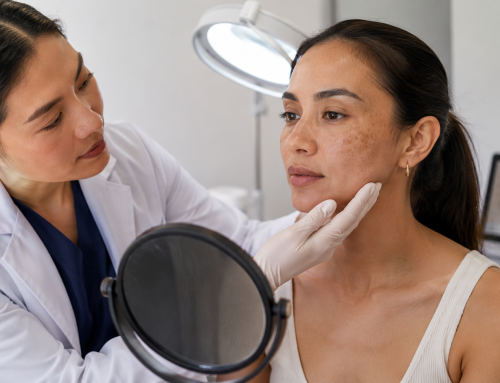
Differences between dermatologists and beauticians: while dermatologists use more intensive medical procedures such as lasers, strong chemical peels or prescription creams, beauticians work with gentler yet still effective methods. These do take more time, but are usually better tolerated. Ideally, the two approaches complement one another: medical therapies can be usefully supported by cosmetic treatments.
Causes: hyperpigmentation arises from excessive production of melanin in the skin. This is triggered by various stimuli:
- Sun exposure: UV radiation stimulates melanin production as one of the body’s protective functions. The resulting tan protects skin cells from damage. However, sun spots (lentigines solares) can also develop. UV-induced hyperpigmentation is the most common form. On the face in particular, it is regarded as distinctly bothersome.
- Hormonal changes: pregnancy, hormonal contraceptives or certain medicines can cause melasma. With hormonally related changes, the cause lies in the fact that hormones stimulate the melanocytes to greater activity, so that they deposit more pigment in the skin.
- Post-inflammatory hyperpigmentation (PIH): this develops when inflammation of the skin releases certain messenger substances that stimulate the pigment cells to produce more melanin. This excess pigment is deposited either in the upper skin layer (epidermis) or deeper in the skin (dermis), resulting in dark patches that can be persistent. A typical example is inflammatory acne, particularly where spots have been squeezed improperly: so-called post-acne marks can remain as a result.
- Genetic predisposition: some forms of hyperpigmentation may be congenital or acquired over the course of a lifetime.
- Skin ageing: with increasing age, the distribution of melanin can become irregular because processes in the skin slow down.
A wide range of methods can nonetheless reduce hyperpigmentation.
The treatment of hyperpigmentation by the beautician uses non-invasive procedures that are nevertheless effective:
Chemical peels, for example, are used to remove dead skin cells and to exfoliate the pigmentation. Various acids are generally used (AHAs – alpha hydroxy acids, for instance). Unlike dermatological peels, the acids used in cosmetics are lower in concentration. However, the darker the skin type and the more deeply the peel acts, the greater the risk of side effects such as post-inflammatory hyperpigmentation (PIH). A further disadvantage is the preparatory acclimatisation phase for the skin (priming) needed to reduce complications. Alternatively, the upper layer of skin can also be removed by mechanical methods. Natural peeling courses are an excellent alternative. They have a deep-reaching effect on accumulated pigment. Through exfoliation, they remove the uppermost skin layer and with it superficial pigment. The skin is then stimulated to form new cells and strengthened from within by accelerated regeneration processes. Microdermabrasion – in which the uppermost skin layer is abraded – can also be used as a treatment. It stimulates cell renewal and produces a more even complexion.
LED light therapy is increasingly being used as a complementary treatment in cosmetics – including for hyperpigmentation. Initial reports suggest that green light in particular may have a brightening effect on dark skin discolouration by regulating melanin production. Scientifically robust evidence of efficacy in pigment disorders is, however, still lacking.
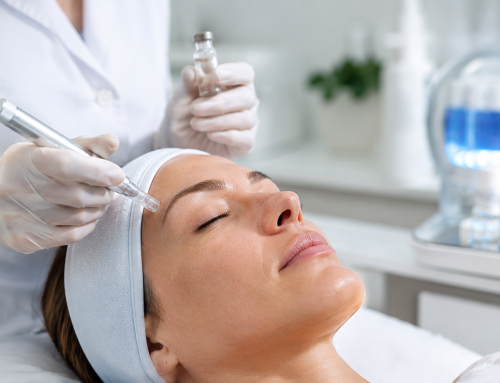
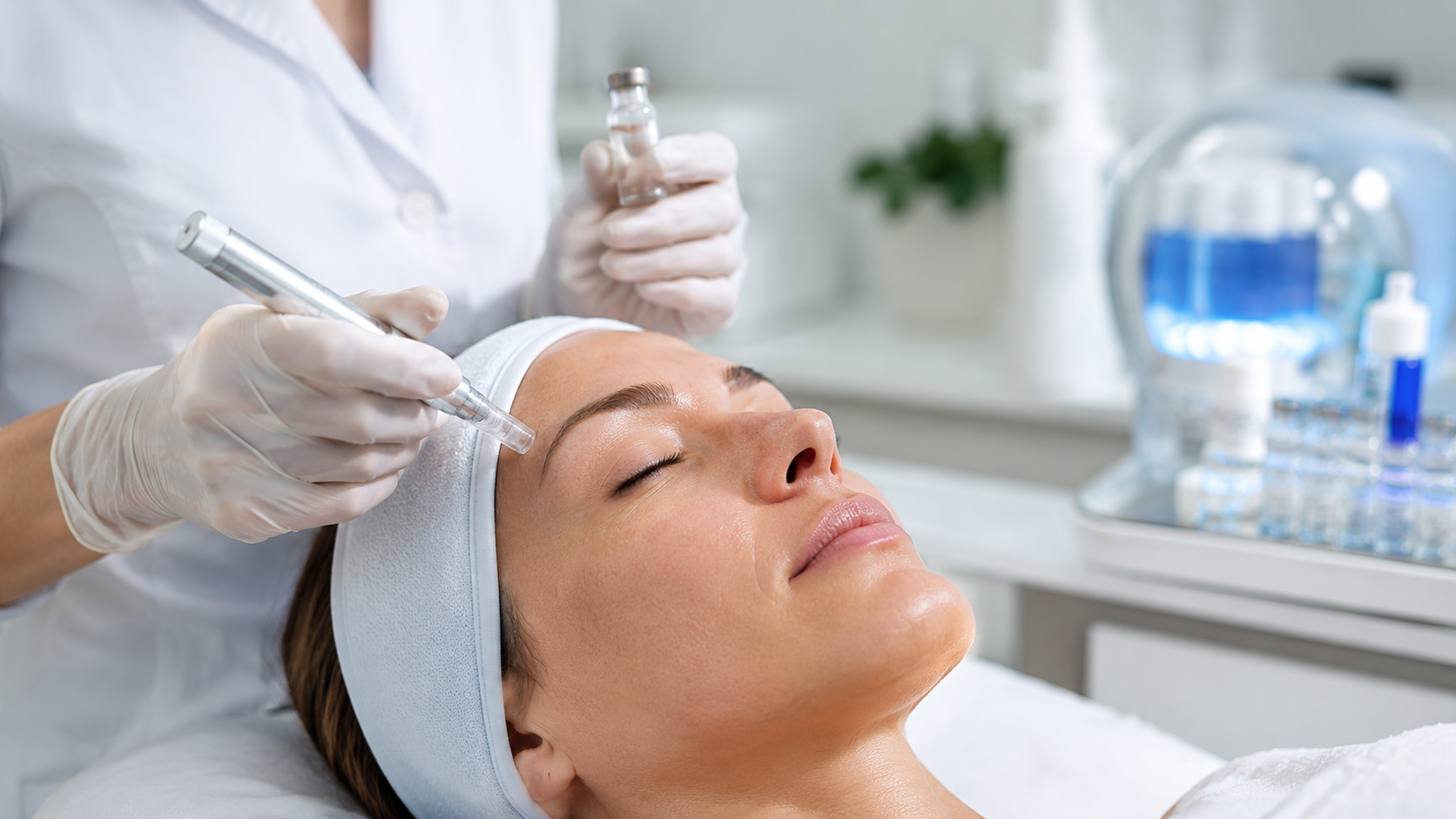
Microneedling with brightening active ingredients can be performed by both beauticians and dermatologists. The difference lies in the penetration depth of the needles. The numerous tiny needles stimulate collagen production and allow brightening actives to be introduced into the skin more effectively.
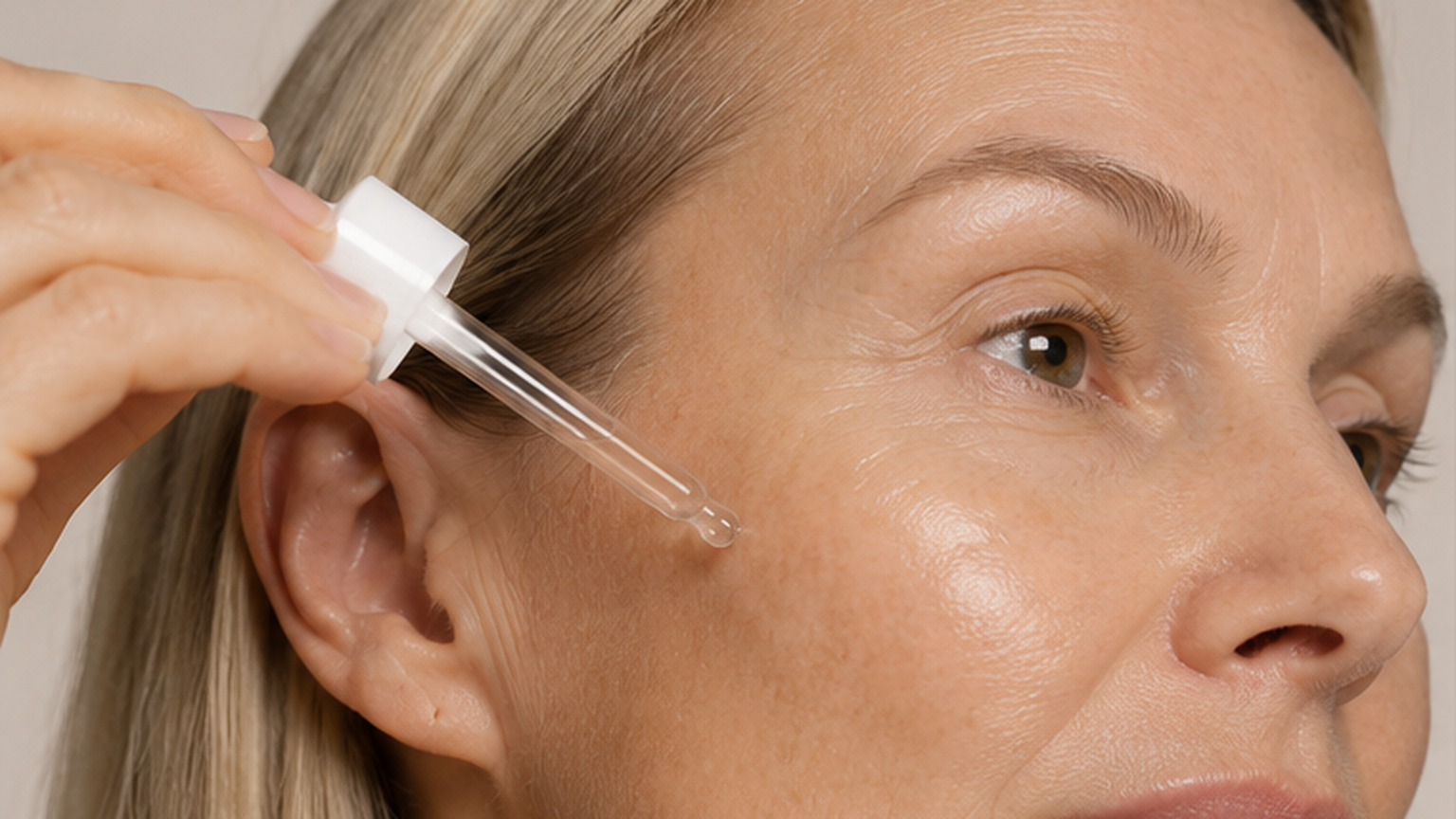
Products with brightening active ingredients are also available, either on their own or as accompanying home care alongside one of the methods described above. Pigment formation (melanogenesis) is generally a multi-layered process. Experience shows that treatment success is greater when the various processes of pigment formation are tackled simultaneously. Ideally, products act before melanin synthesis (tyrosine transcription), during it (tyrosinase inhibition) and afterwards as well (inhibiting the distribution of melanin to surrounding cells, and breaking melanin down). An anti-inflammatory component should additionally be considered, since inflammatory processes play a central role in the development of many forms of hyperpigmentation – addressing these as well can significantly improve the overall result.
The focus is on active ingredients whose use is safe and whose efficacy has been demonstrated in in-vitro and/or in-vivo studies. Examples include vitamin C, azelaic acid derivatives, niacinamide (vitamin B3) and the enzyme lignin peroxidase (LiP). Other actives are likewise effective, but their use in cosmetics is contentious. Kojic acid can cause skin irritation and is already banned in Switzerland. With tranexamic acid, a medicinal function cannot be ruled out at concentrations above 1%, which makes the distinction from a pharmaceutical product more difficult and limits its use in cosmetics.
Dermatologists, by contrast, have access to invasive procedures and prescription active ingredients for reducing hyperpigmentation:
In medical care for skin brightening, various pharmaceutical substances are used. Hydroquinone and retinoids (tretinoin, for example) are the main ones, but arbutin, kojic acid, tranexamic acid and azelaic acid are also applied. Depending on the active ingredient and its concentration, skin irritation may occur, and patients must be clearly informed about this. Medical chemical peels are a well-established treatment for hyperpigmentation. Here, more highly concentrated acids such as glycolic acid, trichloroacetic acid (TCA) or combined peeling solutions are used. These selectively remove the upper skin layers, promote cell renewal and support the breakdown of excess melanin. The brightening effect usually appears more quickly than with cosmetic peels, although stronger irritation, peeling or downtime are possible. The choice of peel should be tailored individually to skin type and type of pigmentation, and belongs in the hands of medical professionals.
Medical laser therapies aim to destroy excess melanin selectively or to promote its breakdown. Depending on the type of laser, the pigment is heated by short-wave light and then broken down by the body (with pulsed pigment lasers such as the Q-switched Nd:YAG, for example). Other procedures (the fractional thulium laser, for instance) create microscopically fine channels in the skin, promote cell renewal and allow brightening active ingredients to be introduced in a targeted way. The choice of laser depends on the skin type, the depth of the pigmentation and the type of hyperpigmentation.
Whichever treatment is carried out, parallel preventive measures are essential:
- Consistent sun protection:
- Apply broad-spectrum sunscreen (SPF 50) daily.
- Avoid direct sunlight, especially around midday.
- Gentle skin care:
- Avoid irritating ingredients in order to prevent inflammation and post-inflammatory hyperpigmentation.
- A healthy diet:
- Foods rich in antioxidants (vitamins C and E, beta-carotene) support skin health.