
Acne and rosacea are among the most common inflammatory skin conditions encountered by dermatologists and estheticians in their daily practice. Both conditions go far beyond cosmetic concerns: They can significantly affect self-esteem, social interactions, and overall quality of life.
Both require individualized treatment strategies and can greatly benefit from close collaboration between dermatology and professional skin care. While medical treatment specifically addresses the condition and its underlying mechanisms, professional esthetic care can provide valuable complementary support and help maintain skin stability.
Professional esthetic care is not a substitute for medical treatment. Rather, it plays an important complementary role in a comprehensive, long-term treatment strategy.
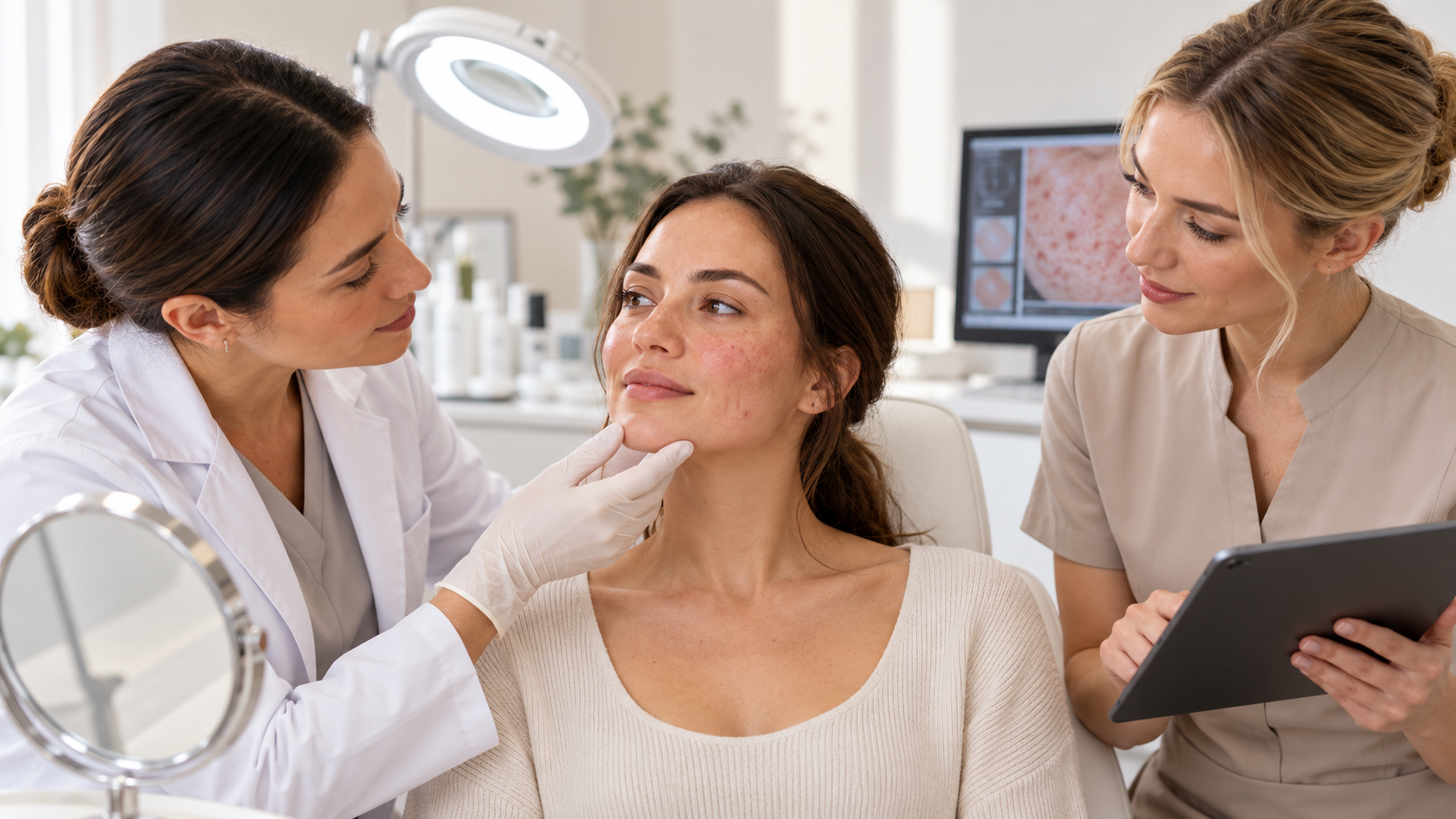
In this article, dermatologists Dr. med. Christine Schrammek-Drusio and Christina Drusio, MD use real-world practice examples to explain the respective roles of dermatologists and estheticians, where professional boundaries must be maintained, and how the two disciplines can work together effectively.
Depending on the condition and its severity, medical treatment with topical or systemic retinoids, antibiotics, or other anti-inflammatory medications is often a central component of therapy. However, certain medical treatments can place additional stress on the skin, potentially causing dryness, irritation, or disruption of the skin barrier.
This is where professional skin care becomes particularly valuable. A well-designed skin care regimen can improve the tolerability of prescribed treatments, support treatment adherence, and promote skin recovery once acute inflammation has subsided.
Acne vs. Rosacea: Understanding the Differences
Although acne and rosacea can present with similar visible symptoms, such as redness, papules, and pustules, they differ significantly in their underlying mechanisms, clinical progression, and characteristic features.
- Acne develops through a combination of excessive sebum production, follicular hyperkeratinization, colonization by Cutibacterium acnes, and inflammatory processes. It typically begins during puberty but may persist into adulthood or develop for the first time later in life (adult acne, also known as acne tarda). Characteristic lesions include comedones, papules, pustules, and, in more severe cases, inflammatory nodules. Atrophic acne scars may develop as the condition progresses.
- Rosacea, on the other hand, is a distinct chronic inflammatory skin condition in which immune-mediated and neurovascular processes play a particularly important role. Common clinical features include transient or persistent facial redness, visible dilated blood vessels (telangiectasias), and inflammatory papules and pustules. An important distinguishing feature is the typical absence of comedones. Rosacea primarily affects middle-aged and older adults.
Rosacea is more frequently diagnosed in individuals with lighter skin tones (Fitzpatrick skin types I and II). However, it may be underdiagnosed in individuals with darker skin tones because redness can be less visually apparent. Women are affected more frequently overall, while pronounced tissue thickening, particularly around the nose, occurs more often in men. Flare-ups may be triggered or aggravated by individual factors such as UV exposure, heat, alcohol, or certain foods.
For estheticians, this means that both conditions require an individualized approach. While gentle, barrier-supporting skin care is beneficial for both, additional active ingredients and professional treatments must be carefully selected according to the specific condition and its symptoms.
Real-World Examples of Collaborative Dermatologic and Esthetic Care
A. Acne During Retinoid Therapy: Supporting the Skin Barrier Through Professional Skin Care
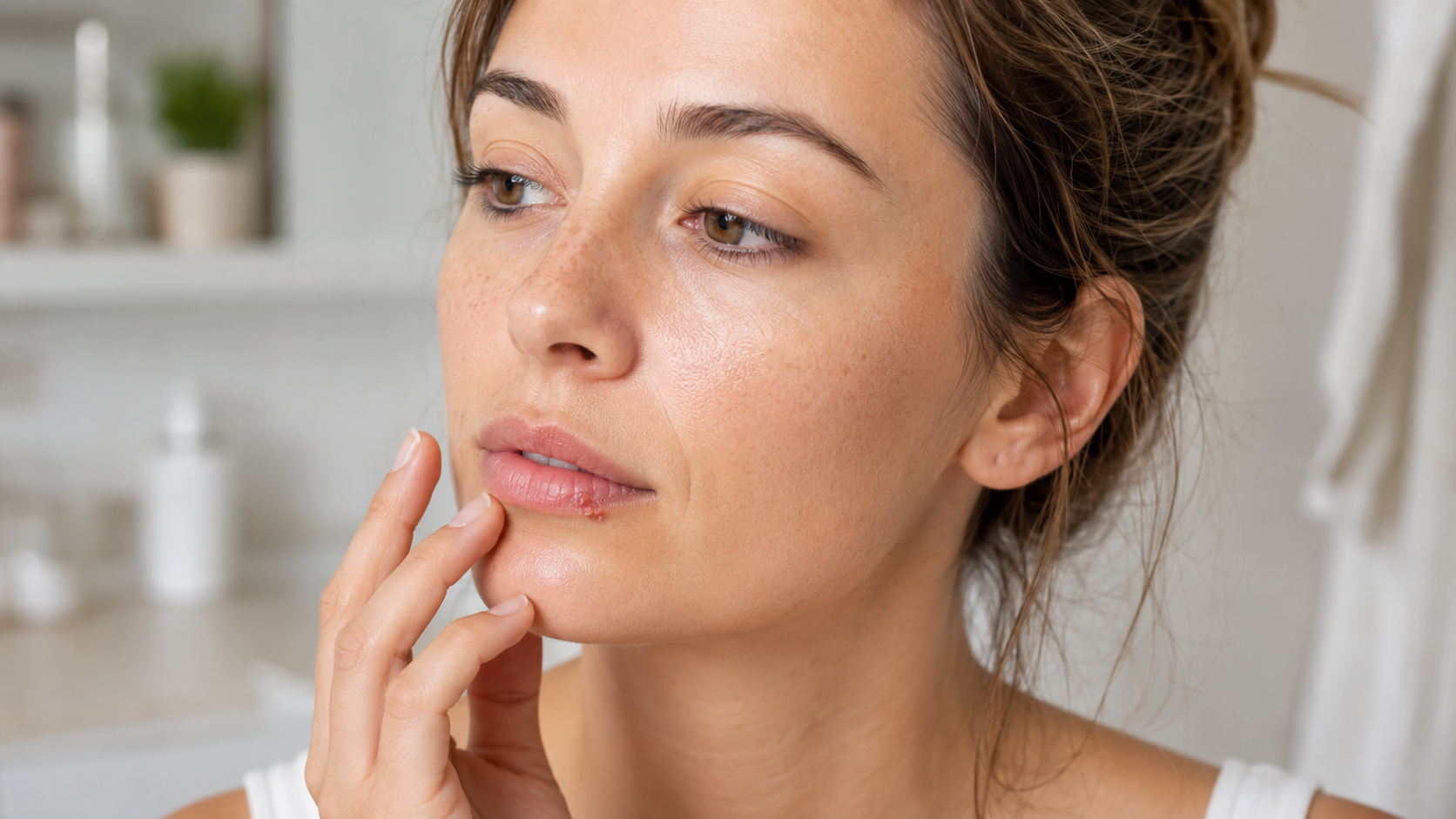
Topical retinoids are among the key medical treatment options for acne. In more severe cases, oral isotretinoin may be prescribed [1]. Both topical retinoids and oral isotretinoin can contribute to skin irritation, dryness, and redness, placing additional stress on a skin barrier that is often already compromised in acne-prone skin.
This is where the benefits of complementary professional skin care become particularly evident. A gentle, non-comedogenic, lipid-replenishing regimen containing barrier-supporting ingredients such as ceramides and niacinamide can help alleviate dryness and tightness during treatment.
Another important benefit is improved treatment adherence. Patients who experience fewer uncomfortable side effects are less likely to discontinue their prescribed medical treatment prematurely.
Recommended Skin Care Routine During Treatment:
- Thorough yet gentle cleansing: Cleansing should be tailored to the skin’s current condition and effectively remove excess sebum, impurities, and sunscreen without causing excessive dryness or additional irritation.
- An appropriate facial toner: Depending on the skin’s needs, a toner may provide soothing and hydrating benefits or help clarify the skin and regulate excess sebum. Suitable ingredients include niacinamide, zinc PCA, and allantoin.
- Non-comedogenic, lipid-replenishing moisturizer: Choose a moisturizer formulated with ingredients that help strengthen and support the skin barrier.
- Consistent morning sun protection: Use a sunscreen with SPF 50 or higher, as retinoid therapy can increase skin sensitivity to UV exposure, while a compromised skin barrier may make the skin more susceptible to irritation.
B. After the Acute Phase: Addressing PIH, PIE, and Acne Scars
Even after acute inflammation has been largely controlled through medical treatment, visible signs may remain, including post-inflammatory hyperpigmentation (PIH), post-inflammatory erythema (PIE), and acne scars. These residual changes can continue to cause significant distress and require different treatment approaches depending on their characteristics.
An important distinction in professional practice is that PIH and PIE are post-inflammatory changes in skin coloration, whereas acne scars involve structural changes to the skin tissue. Depending on their severity and presentation, different dermatologic and esthetic treatment options may be considered.
Professional Skin Care Approaches for Post-Inflammatory Skin Changes:
- Consistent use of high-level sun protection to help prevent further darkening of pigmentation.
- Superficial chemical peels or herbal-based exfoliation treatments, depending on the skin’s condition.
- Skin care ingredients that help even out skin tone and modulate inflammation, such as niacinamide. For irritated or sensitive skin, additional soothing ingredients such as panthenol, allantoin, or aloe vera may be beneficial.
Treatment Options for Acne Scars:
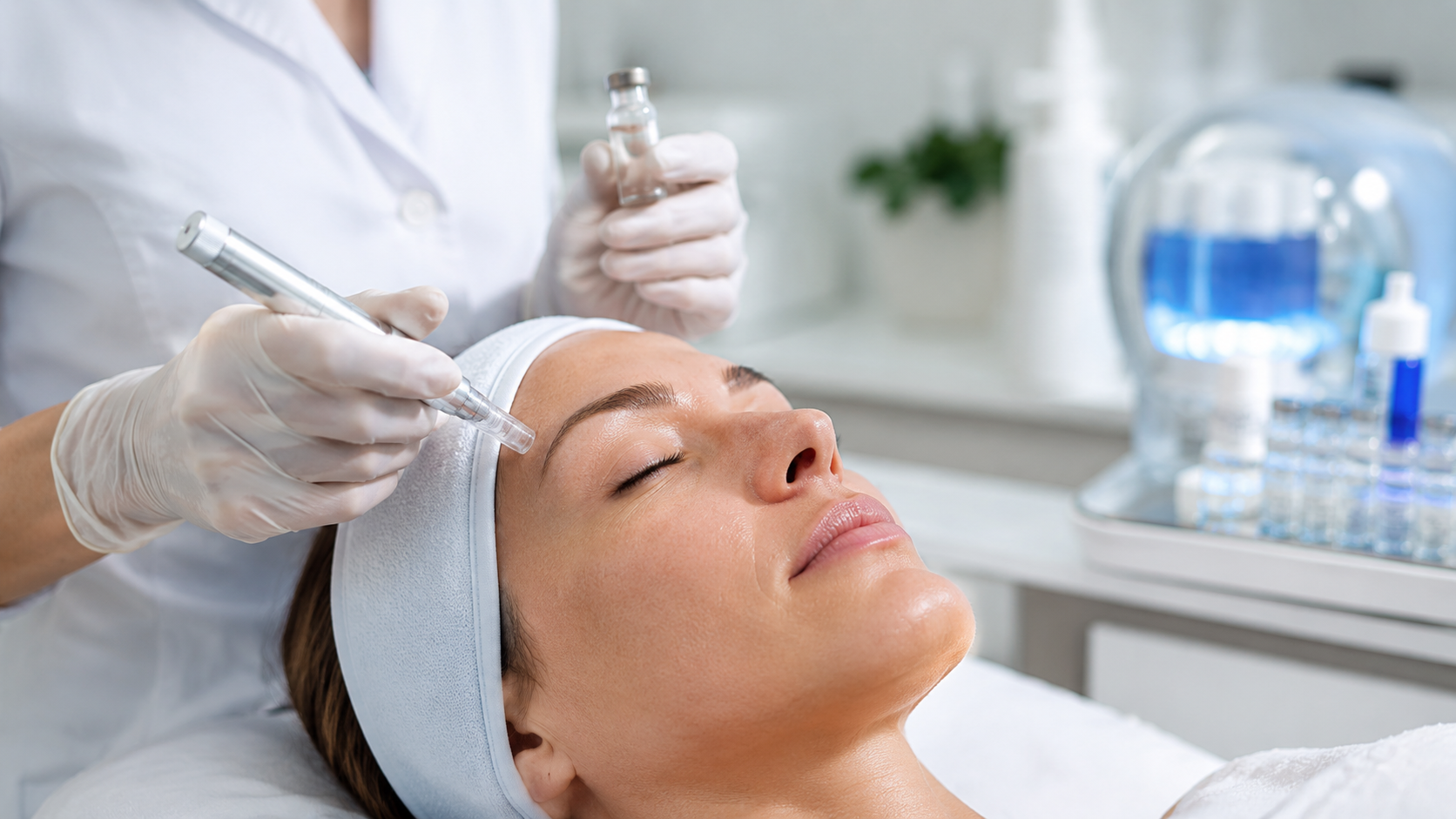
For deeper atrophic acne scars, different treatment methods may be appropriate depending on the type and severity of scarring. These include professional esthetic treatments such as chemical peels and microneedling, as well as physician-performed procedures such as TCA CROSS (focal application of trichloroacetic acid to atrophic scars) or fractional laser resurfacing. Depending on the individual case, additional aesthetic procedures, such as hyaluronic acid fillers, may also be considered.
Because different scar types often require different approaches, treatments are frequently combined strategically to achieve optimal results.
More intensive peeling and laser procedures are preferably performed during periods of reduced sun exposure due to the risk of post-inflammatory pigmentation changes [2].
Following more intensive procedures, gentle, barrier-supporting skin care and consistent sun protection are particularly important.
C. Rosacea: Combining Medical Treatment With Professional Skin Care
Medical treatment for rosacea is guided by the patient’s predominant symptoms.
For inflammatory papules and pustules, topical medications such as metronidazole, azelaic acid, or ivermectin may be prescribed. In cases with more pronounced inflammatory activity, low-dose doxycycline may be used. At these subantimicrobial doses, the primary therapeutic benefit is its anti-inflammatory rather than antibacterial effect.
For persistent redness and visible vascular changes, light- and laser-based treatments, including intense pulsed light (IPL), may provide additional benefits [4].
From a professional skin care perspective, the main priorities are strengthening the skin barrier and providing anti-inflammatory support. Identifying and avoiding individual triggers and unnecessary irritation is equally important.
Recommended Professional Skin Care Strategies:
- Avoid mechanical and thermal irritation: This includes aggressive exfoliation, excessively hot water, and vigorous facial massage.
- Use soothing, anti-inflammatory, and antioxidant ingredients: Ingredients such as Centella asiatica, vitamin C, and zinc compounds may help support the skin and its vascular function. Additional redness-reducing ingredients can be incorporated as appropriate.
- Ensure consistent broad-spectrum sun protection: UV exposure is a well-established trigger for rosacea flare-ups.
- Consider tinted or color-correcting skin care products: Specialized formulations that combine skin care benefits with color-correcting pigments can improve the appearance of redness. Green pigments can visually neutralize redness, while skin-tone-adapting pigments help create a more even-looking complexion.
Estheticians play an important role in recommending suitable, non-irritating skin care products and helping clients identify environmental and lifestyle-related triggers in their daily routines. Medical management of acute inflammatory symptoms, however, remains the responsibility of a qualified physician.
D. Nutrition as a Complementary Counseling Approach for Acne and Rosacea
Nutrition is receiving increasing attention in research on inflammatory facial skin conditions.
Studies suggest that diets associated with a lower glycemic response may improve the appearance of acne-prone skin within just a few weeks. Research has also shown potential benefits from increased intake of omega-3 fatty acids [3].
In rosacea, the relationship between diet and skin health is more complex, and the available scientific evidence remains limited. One area of investigation is the potential influence of the gut microbiome, as reduced bacterial diversity in the gut has been observed in individuals with rosacea [3].
Estheticians can also provide valuable support in this area through evidence-informed education and guidance, provided they have the appropriate professional knowledge and training.
For clients with acne, counseling may include discussing high-glycemic foods as well as dairy and whey-based products. For clients with rosacea, the focus should be on identifying and avoiding potential individual dietary triggers.
The scientific evidence regarding the influence of nutrition on acne and rosacea is still limited. Dietary recommendations should therefore be viewed as supportive measures within a comprehensive treatment strategy, not as a replacement for medical care.
Conclusion
These practical examples demonstrate that coordinated collaboration between dermatology and professional esthetic care can provide significant added value, particularly in the management of acne and rosacea.
While medical treatments directly target the underlying condition and its inflammatory processes, professional skin care helps stabilize the skin barrier, improve the skin’s appearance, and support long-term skin balance.
The key is not choosing between dermatology and professional skin care, but integrating both disciplines effectively—with an individualized approach that considers the skin’s current condition, the stage of the disease, and each patient’s unique needs.
References
- Augustin M, Dirschka T, Gerber PA, Kerscher M, Kirsten N, Ochsendorf F. Acne tarda: Empfehlungen zu Einordnung, Therapie und Pflege als Ergebnis einer Expertendiskussion. J Dtsch Dermatol Ges. 2026;24:11–23.
- Benckendorff A. Aknenarben – multimodale Therapiekonzepte ausschöpfen. Ästhet Dermatol Kosmetol. 2026;18:24–25. doi:10.1007/s12634-026-3164-8.
- von Kieseritzky K. Einfluss des Essens bei Akne und Rosazea. Hautnah Dermatol. 2025;41:71–73. doi:10.1007/s15012-025-8789-1.
- Menashe S, Bermejo IG, Lois M, Molinari LM, Reig MI. Effective treatment of rosacea and telangiectasias using IPL. J Cosmet Dermatol. 2025;24.