
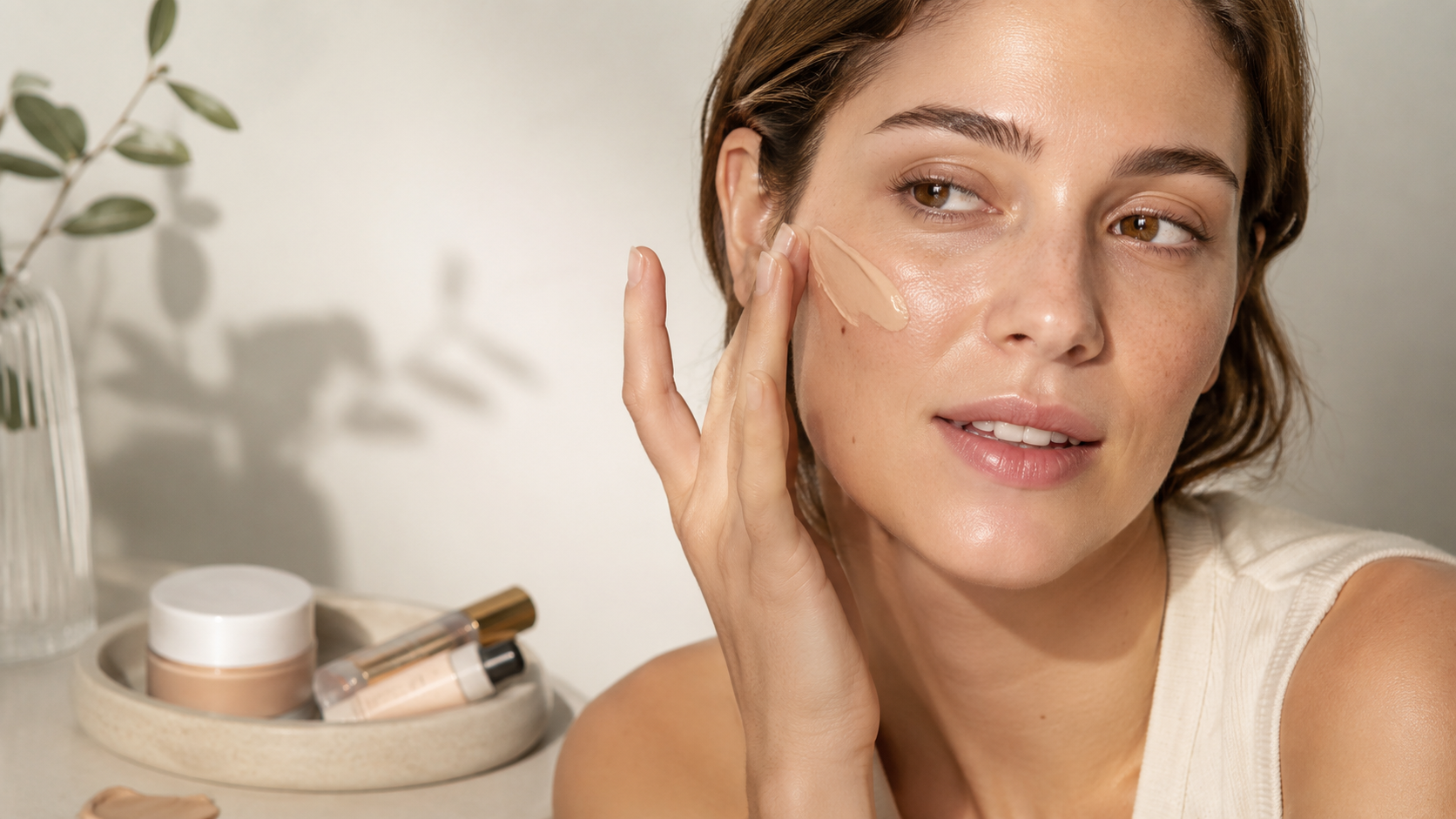
The boundaries between colour cosmetics and skin care are becoming increasingly blurred, and the hybrid product category brings the two worlds together in a genuinely useful way:
Hybrid products care for and protect the skin and correct the complexion in a single step. Tinted serums, BB fluids, skin tints and tinted speciality products such as blemish balms or CC creams respond above all to changing consumer behaviour: a simple care routine, fewer products, greater efficacy, quick application – products that go far beyond merely covering or tinting the skin. What was once a trend has long since become a firm part of skin care.
For beauticians, this creates an important consultancy role. Being able to explain competently what benefits these products offer, which skin types they are best suited to and which active ingredients are needed builds trust – and client loyalty. In addition, some hybrid products can be integrated into professional treatment concepts, for example as a covering finishing step after intensive treatments such as herbal peeling courses or chemical peels.
Hybrid products are cosmetic formulations that combine classic care effects with decorative elements. The best-known categories are BB creams (blemish balm or beauty balm), CC creams (colour correcting), skin tints and tinted day or protection fluids. They combine a light tint or make-up-like coverage without dispensing with active care ingredients. The formulations rely on moisturising, anti-inflammatory, soothing or protective actives that complement the visual evening-out of the complexion.
Special formulas additionally offer UV protection (UVA and UVB) and anti-fatigue or soft-focus effects that produce a long-lasting, refined complexion. Optical soft-focus particles scatter incoming light and disguise irregularities without visibly covering them – the result is a naturally even complexion with no perceptible make-up finish. Different colour nuances also allow a range of skin tones to be covered.
Hybrid care therefore creates genuine added value compared with classic, purely decorative make-up products.
Active ingredients
An important point in consultations is that hybrid products are not purely covering products, but rather serve as a care-intensive daily routine which, in addition to tinting the skin, also actively addresses the condition of the skin.
The active ingredient profile of modern hybrid products is correspondingly multi-layered.
Mineral pigments such as zinc oxide and titanium dioxide have a dual function: they visually cover redness and irregularities while at the same time acting as anti-inflammatories and, in some cases, as UV filters. Zinc oxide also has antimicrobial properties – a clear advantage for blemished or irritated skin.
Moisturising actives such as panthenol, glycerin, hyaluronic acid or aloe vera are used above all for dry skin. Soothing ingredients such as bisabolol, liquorice root extract or allantoin reduce redness, promote cell regeneration and are also suitable for sensitive skin.
With speciality products used in the context of professional treatment protocols, the effect goes even further. In such cases, hybrid balms are designed for irritated and reddened skin, among other things, and combine strongly covering colour pigments with a cosmetically highly soothing active ingredient profile.
Use in the salon
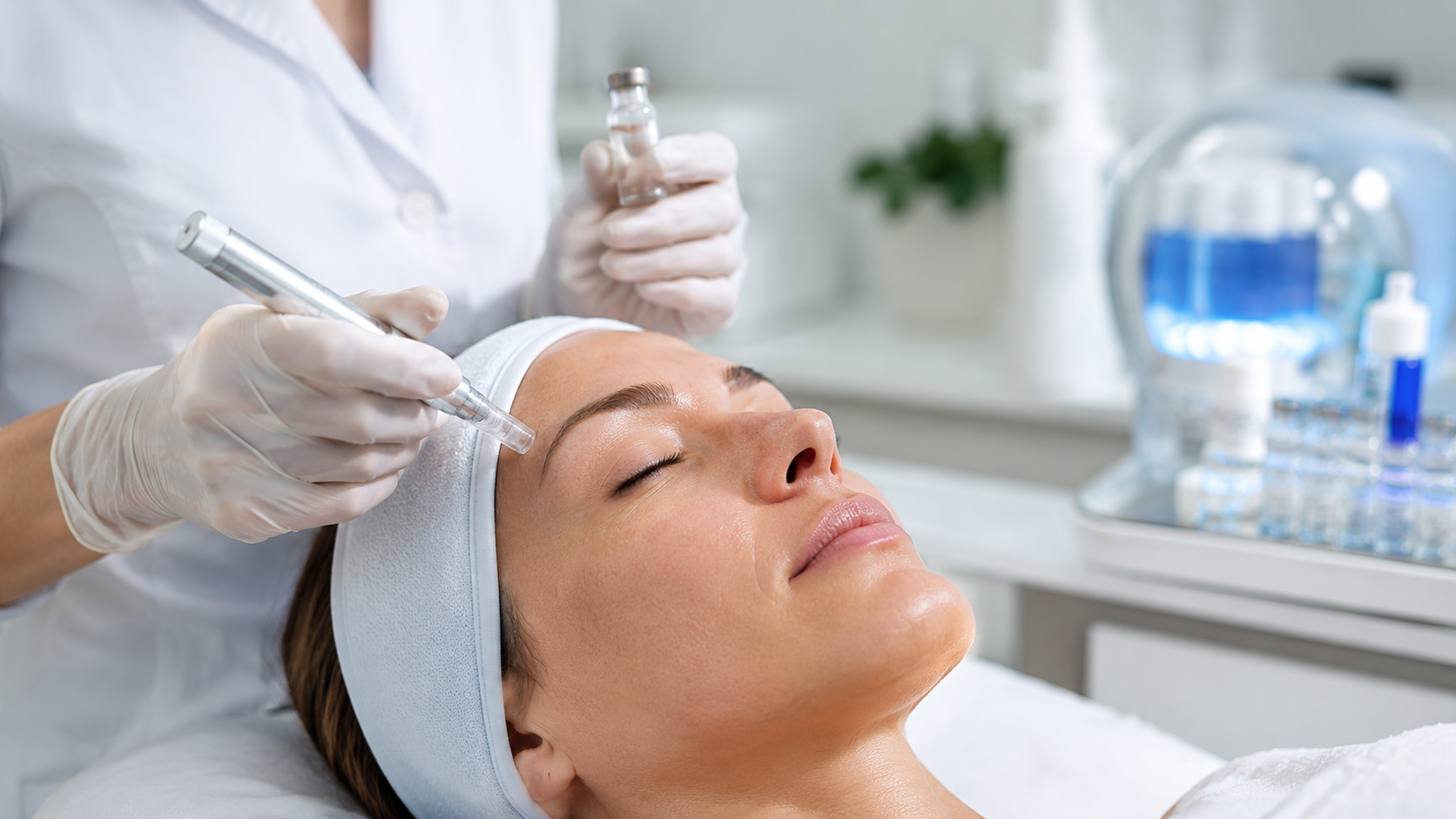
As a final treatment step, hybrid products protect sensitised skin, supply it with moisture and enable the client to leave the salon with a well-groomed complexion – with no separate make-up step. After peeling treatments or intensive device-based procedures in particular, hybrid care protects the sensitive skin and delivers an immediately visible cosmetic improvement.
A live demonstration at the end of the treatment is a powerful selling point: when the client sees how a single product improves the complexion and cares for the skin at the same time, that makes for a lastingly convincing recommendation.
Recommendation for home care
For optimal results at home, hybrid products should always be embedded in a complete routine: cleansing and toning prepare the skin and maximise the absorption of active ingredients. A serum matched to the skin type delivers targeted actives. Only then does the hybrid product follow as the final, multifunctional step. The hybrid product does not replace the basic routine but consistently builds on it.
Hybrid products are not a short-lived trend but the expression of changed expectations: clients want care that works – and that improves the appearance of their skin at the same time. For beauticians this represents a real opportunity: those who know the active ingredients, understand the products and recommend them purposefully position themselves as competent advisers and create tangible added value.